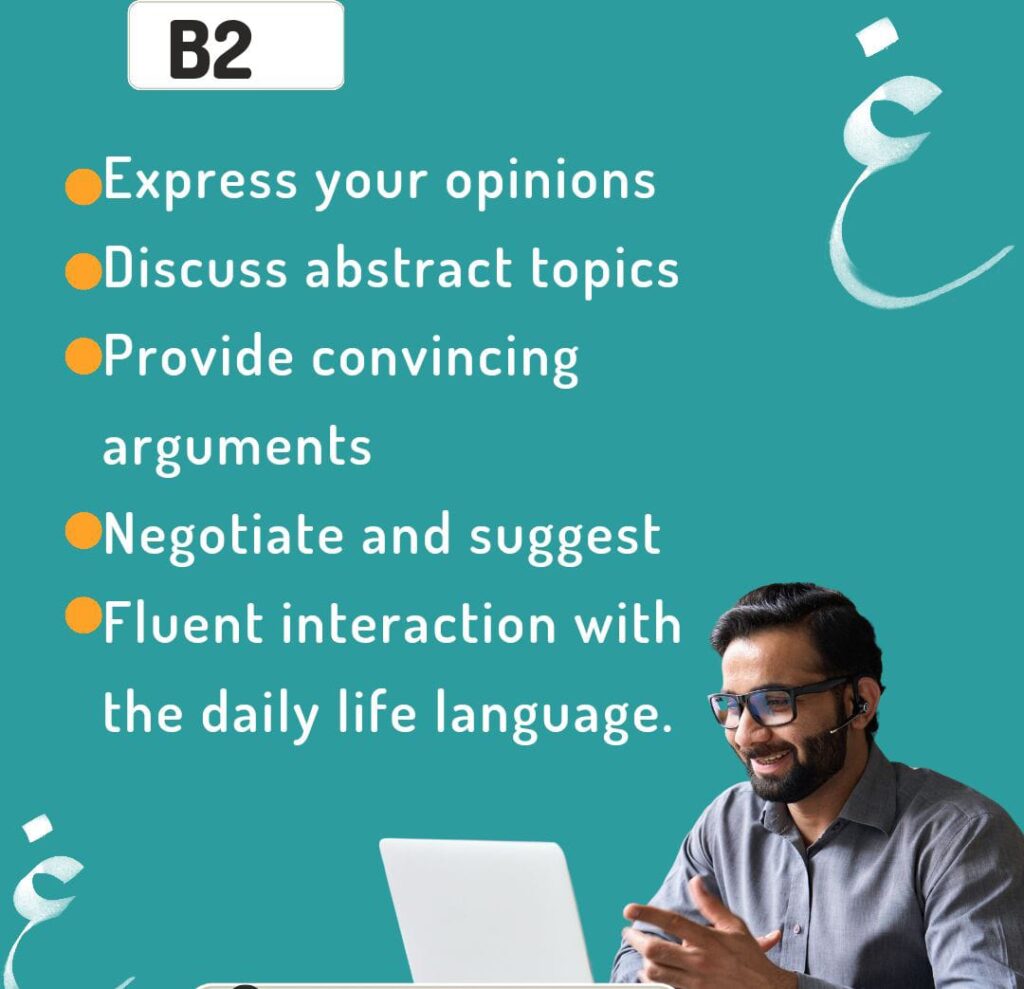
Upper intermediate
1. *لماذا نتعلم اللغة العربية؟ – Why do we learn Arabic?*
– الفوائد الثقافية واللغوية (Cultural and linguistic benefits)
– دور اللغة العربية في العال
2. *فلسطين – Palestine*
– التاريخ والجغرافيا (History and geography)
– الصراع الفلسطيني والإسرائيلي (The Palestinian-Israeli conflict).
3. *وفاء الكلب – The loyalty of the dog* –
– العلاقة بين الإنسان والحيوان (The relationship between humans and animals)
– أمثلة على وفاء الكلب
4. *تنظيم الوقت – Time management*
– كيفية تنظيم الوقت (How to manage time)
– فوائد التنظيم الجيد (Benefits of good time management).
5. *شجرة جوز الهند – The coconut tree*
– استخدامات شجرة جوز الهند (Uses of the coconut tree)
– فوائد جوز الهند الصحية (Health benefits of coconut).
6. *الفاكهة – Fruits*
– أنواع الفاكهة (Types of fruits)
– الفوائد الغذائية للفاكهة (Nutritional benefits of fruits).
7. *رسالة إلى صديق – A letter to a friend*
– كتابة رسالة ودية (Writing a friendly letter)
– الهيكل والتنسيق (Structure and format).
8. *شرطي المرور – The traffic policeman* :
– مسؤوليات شرطي المرور (Responsibilities of a traffic policeman)
– إرشادات السلامة المرورية (Traffic safety guidelines).
9. *تطور الصناعة – Industrial development* :
– التطور التكنولوجي والصناعي (Technological and industrial development)
– تأثير الصناعة على البيئة (The impact of industry on the environment).
10. *النوم الجيد – Good sleep*
– فوائد النوم الجيد (Benefits of good sleep)
– عادات النوم الصحية (Healthy sleep habits).
11. *النظافة – Cleanliness*
– النظافة الشخصية (Personal cleanliness)
– أهمية نظافة الأماكن العامة
12. *يوم مطير – A rainy day*
– وصف الطقس (Describing the weather)
– الأنشطة في يوم مطير (Activities on a rainy day).
13. *مناظرة بين البحر والنهر – A debate between the sea and the river* *:
– خصائص البحر والنهر (Characteristics of the sea and river)
– مقارنة رمزية
This approach engages learners with practical vocabulary, creative discussions, and real-world topics to boost their proficiency at the upper-intermediate level.